FJAAK & Elli Acula:
A shared aesthetic with MiniFreak 49
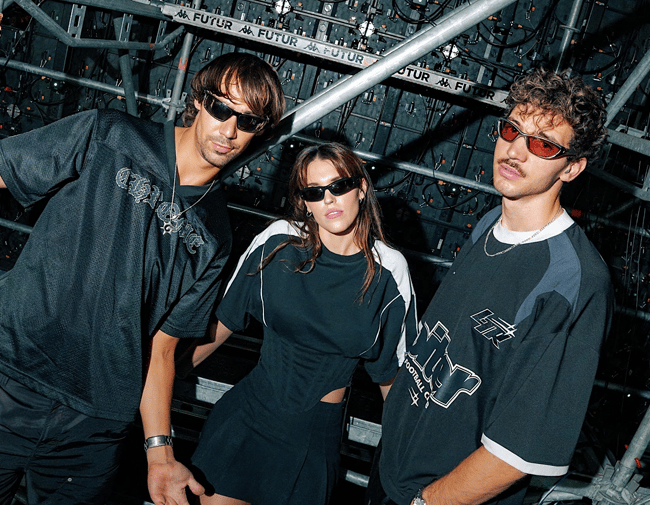
FJAAK and Elli Acula’s music has grown from a shared connection to Berlin’s club culture and the people who sustain it. For FJAAK, the partnership between Felix Wagner and Aaron Röbig began with making tracks together as teenagers in Spandau, developing into a sound that moves between techno, breaks and the energy of their hardware-led live sets. Elli’s route through record collecting and DJing led her towards production, where the sounds and emotions of the dancefloor continue to shape her approach.
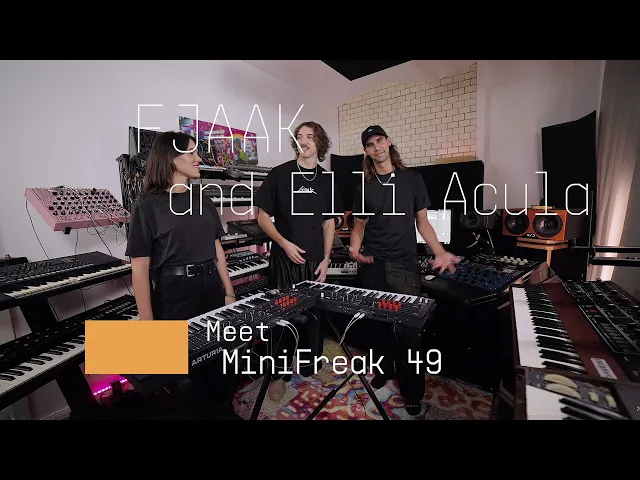
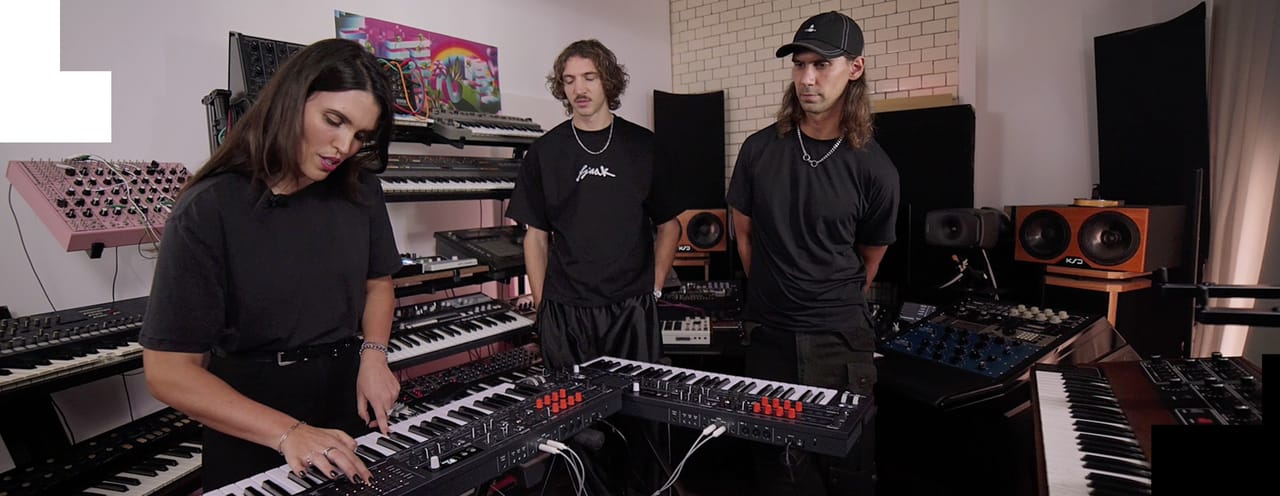
Together, they are part of the community around SPANDAU20, a label and collective built on friendship, collaboration and a love of electronic music. We joined them in the studio to talk about the experiences that brought them together and explore a new track made with MiniFreak 49.
Before the dancefloor
FJAAK were already making music together when they discovered the club and festival scene. They spent their early years experimenting with sounds and sharing ideas among friends without a particular end goal. The music came first though; finding a place where it could be played was at the time a secondary concern.
As they began to explore Berlin’s underground, one connection led to another. Friends introduced them to records and artists whose music opened up new avenues and creative inspiration. Detroit techno became a lasting influence with heavyweights Jeff Mills and Kenny Larkin offering different perspectives on the music they were encountering closer to home.
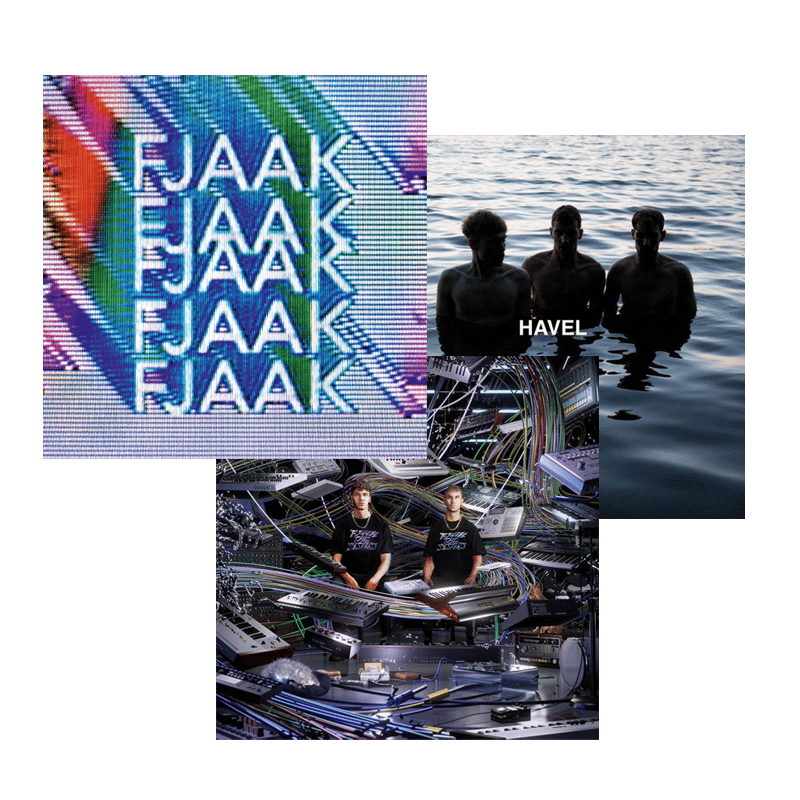
Their self-titled debut arrived on Modeselektor’s Monkeytown Records in 2017, followed by Havel on their own label a year later. Across their releases and live performances, the weight of their club sound has stayed in conversation with breakbeats, melodic passages and more exploratory material. FJAAK THE SYSTEM, released in 2024, brought many of those threads together alongside contributions from friends and collaborators including Modeselektor and Skee Mask.
Through it all, making music has remained something they do for its own sake. In the studio, they still make far more than they release. Some sessions produce a track, others pass without anything being recorded.
We do music just because it’s fun. Sometimes you don’t even record a synthesizer. You just play around. — FJAAK
A shared history
For Elli, the path into electronic music began with digging and collecting. She spent her teenage years searching for records, developing an ear for sounds that felt unfamiliar and learning how they could work together. Behind the decks that curiosity evolved into a style over time, moving between techno, rave and electro according to the feel of a space.
Producing offered another way to follow that instinct. When she couldn’t find a track that matched what she was hearing in her head, she began trying to make it herself. A conversation, an emotion or a moment on the road might become the starting point. From there, she works towards a sound that can carry the feeling.
For me making music starts often with a feeling and this feeling I got from different moments in my life, also from touring, also from club moments, also from emotions and conversations. I have this feeling in myself and I try to translate it into sound. — Elli Acula
That sensitivity to the dancefloor runs through Elli’s own releases, including “Pleasure” and “BFF”, and her Euphoria Sessions series, which grew from a streamed project into a platform for events and artists. It also connects her to the wider circle around FJAAK.
Through SPANDAU20, their friendship extends to a community of artists and collaborators whose work has developed alongside their own. Elli’s first release on the label was “To The Peak”, a track made with FJAAK and later remixed by Steffi. Like many of their collaborations, it came together naturally: exchanging sounds, meeting in the studio and following an idea as it developed.
They know each other well enough to work directly, while leaving space for different instincts. For Felix and Aaron who have spent a long time making music together, Elli brings another perspective into the room.
We know each other on such a deep level. We communicate so straightforward. We get to the point straight away. We exchange, we don’t have the exact same style in music or what we like, but this is what complements it so much. — Elli Acula
A moment at Fusion
Ask them about the experiences that have stayed with them and their thoughts return to Fusion Festival. FJAAK first went as teenagers and kept returning with friends in the years that followed. It became a place they looked forward to all year: a temporary world organised around music and the people gathered to hear it.
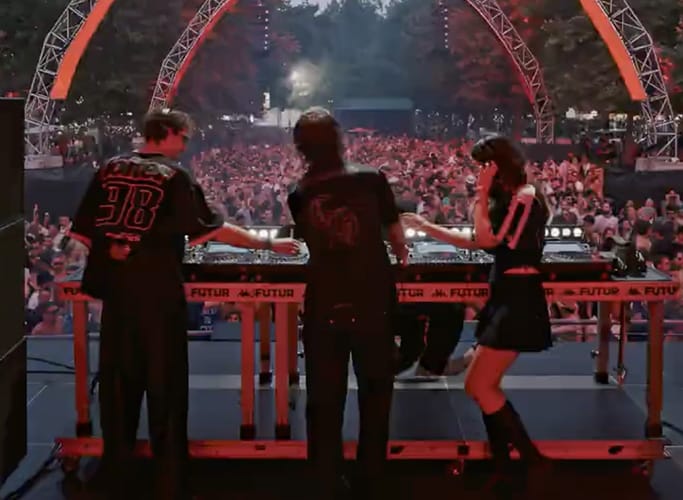
A decade later, they returned to play a live set on the same stage where one of them had first understood that this was what he wanted to do. As the audience came towards them and the set began, the years between those visits became suddenly tangible. Aaron started crying, then Felix did too.
Elli played the same stage at sunrise a few years later. She remembers seeing friends and familiar faces from Berlin in the crowd, at a festival that had been part of her life since her teens. Each arrived there through a different experience, but the feeling was recognisable to all of them.
Making space for the unexpected
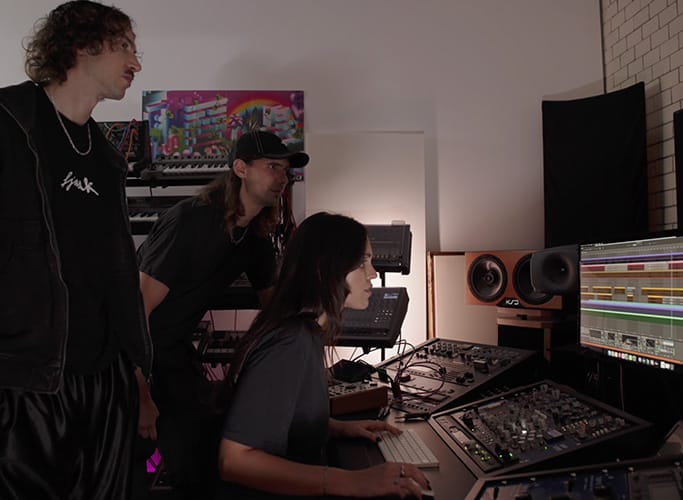
Back in the studio the instruments surrounding them tell their own stories. Some have been collected over years of making music; others were gifts from family or connected to friends. They are working tools, but also reminders of particular moments and the people who were there.
Every new piece of gear changes that environment. It introduces another sound and another way of working, though the most useful instruments are often those that let an idea develop before too much time is spent looking for it.
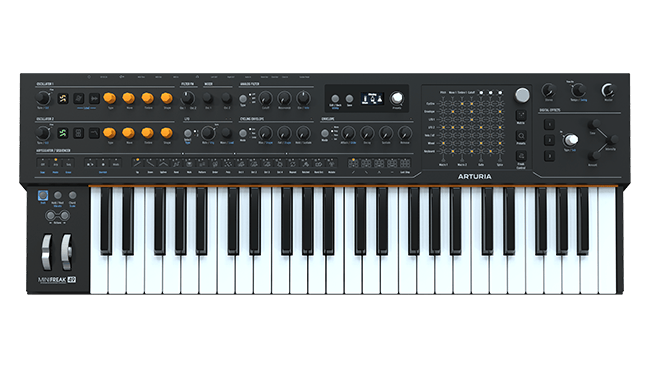
For this session, FJAAK and Elli have two MiniFreak 49s in a hybrid setup. They respond to the instrument’s immediacy: its layout lets them move between the two digital engines, analog filters and modulation while staying close to what they are playing.
A sample can sit alongside a waveform; an LFO can introduce movement; aftertouch can bring a change in timbre or filter response through pressure on the keys. For Elli, this direct relationship is important. She describes sound exploration as a kind of meditation: time spent with a machine, away from distractions, listening closely enough to follow the details.
For me the sound exploration is really feeling like a meditation in a way. That’s how it’s for me. Especially with machines, especially when there’s no big screen or something, or nothing disturbing me. No phones, no laptops in the room. So I’m just on my own with the machine. — Elli Acula
A voice in motion
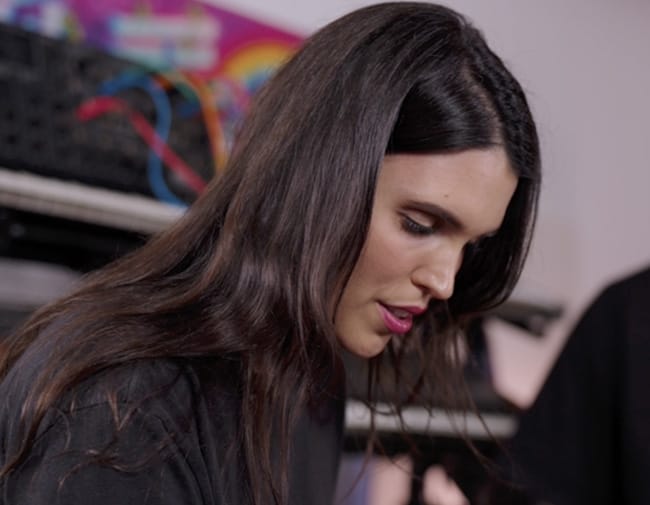
For the track, Elli records her voice and loads the sample into MiniFreak 49. Played across the keys and passed through different sample and granular modes, the phrase becomes material she can stretch, repeat and reshape. Its character changes with each adjustment, while traces of the original voice remain.
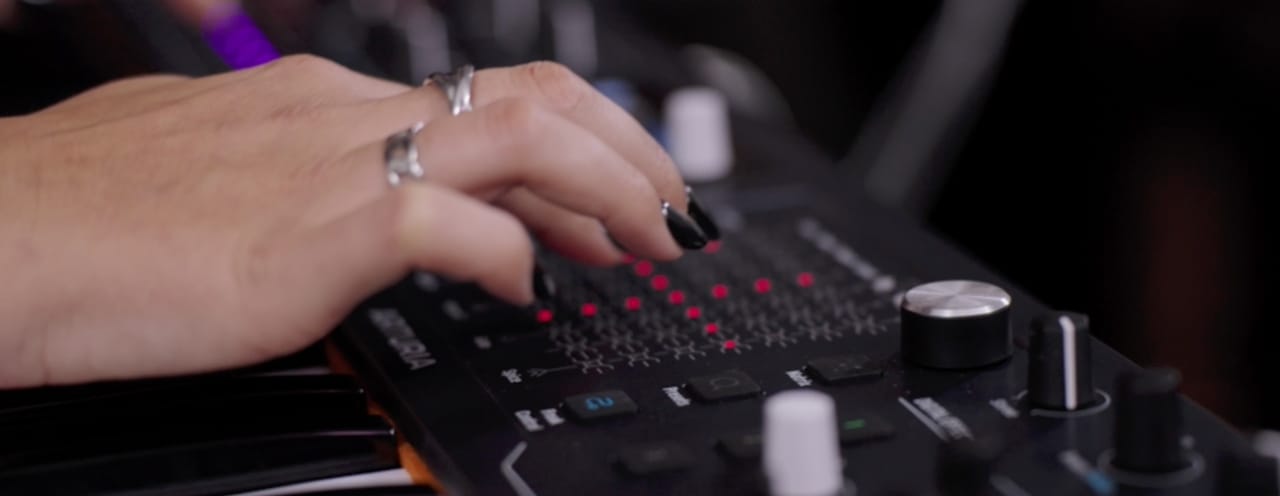
Using Freak Control, she moves between variations with her fingers on the touch matrix. Elsewhere, aftertouch and Filter FM bring further changes into a performance. Rather than settling on a fixed sound before recording, she can continue shaping it as the track plays.
One take runs for around five minutes, with Elli moving between Freak Control and Filter FM throughout. Listening back, they leave the recording uncut. The shifts in timbre and intensity are already part of the performance, giving them a passage that develops across the arrangement.
I felt like I can twist and tweak and change the sounds really quickly and continuously. — Elli Acula
The arpeggiator opens up another approach. Gate length alters the shape of a phrase, while Spice and Dice introduce variation into its movement. As they work, the track shifts between heavier passages and more stripped-back moments, with vocal fragments, pads and effects entering at different points.
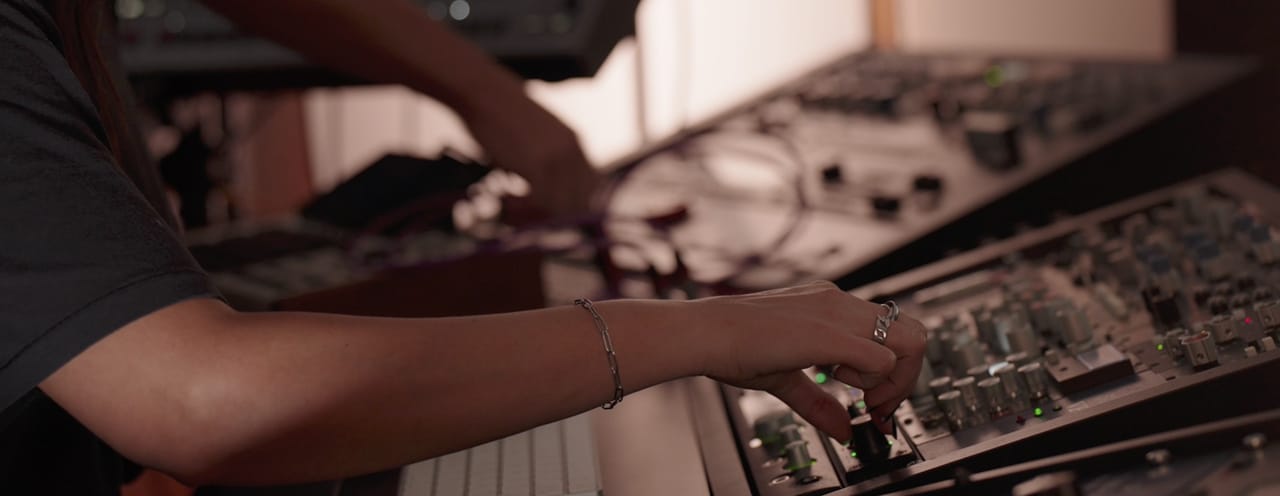
They demonstrate how MiniFreak V can carry their presets into the computer, keeping sounds available when away from the hardware. Much of the modulation and effects work is performed on the synth as they record, with Rev INTENSITY, Delay ETERNITY and Phaser BI-TRON used for additional processing.
The sound of a place
Among the synth parts and processed vocals is another recording: the atmosphere of a street in Berlin. It sits beneath the track for around five minutes, bringing a small piece of their world and surroundings into the session.
This track feels home for us because we literally have the atmo of our home on there. Nobody else will understand, but for us this is home and in a way it’s Berlin, you know. It’s literally like a Berlin atmo and it adds like a depth to the track. — FJAAK
Elli works with recordings in a similarly personal way. She describes capturing her voice on a train using her phone inside her backpack, looking for the particular sound of that space. The train remains audible around her, making the recording difficult to separate from the moment in which it was made.
These details sit alongside the synths, rhythms and effects that move a track towards the dancefloor. They give the production a connection to everyday life, even when the source is transformed or almost imperceptible in the mix.
Beyond the studio
For FJAAK and Elli, the studio and the club are part of the same conversation. A track might begin with a sound they want to spend time with, a recording from their surroundings or an idea exchanged between friends. Once it reaches the dancefloor, it enters a different space, shaped by the system, the room and the people in it.
Elli often takes new music into her sets while it is still taking form, returning to make adjustments after hearing it out. FJAAK describe the first play as a moment that can still take them by surprise. A track they had been unsure about might find a response they hadn’t anticipated.
That exchange has been part of their lives since they first encountered electronic music together. It runs through the records they collect, the community around SPANDAU20 and the time they spend making music in the studio. The connection between those places continues to give the work its purpose.
Sometimes I even remember the faces of the people when I play the track for the first time. It’s a really magical moment and it’s crazy. It’s really emotional and fun. — Elli Acula