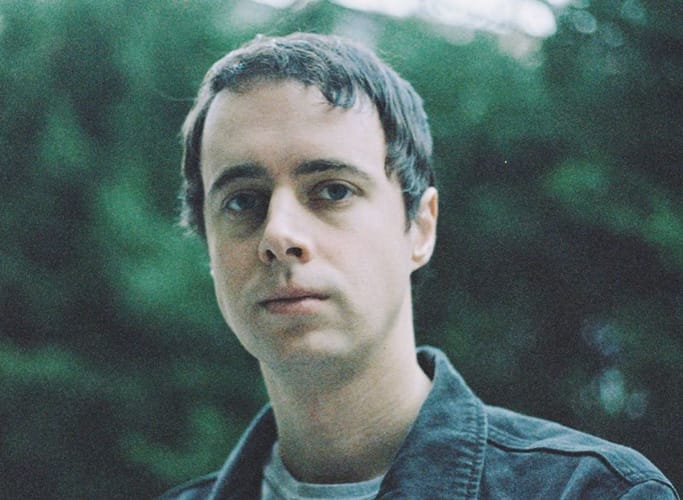
Boy Harsher’s Augustus Muller:
A feeling on repeat with AstroLab and V Collection
Augustus Muller’s music draws much of its force from repetition: a frontal bassline, a clipped drum pattern, a synth shaped until it can hold an arrangement together. As one half of Boy Harsher alongside vocalist Jae Matthews, the American producer and composer has developed a distinctive voice in contemporary darkwave, extending the duo’s work into film with The Runner and his score for My Animal. His collaboration with Cooper B. Handy as Safe Mind gives another side of his songwriting room to emerge, bringing melodic immediacy and an offbeat sensibility to sounds he has spent years exploring.
We joined Augustus to discuss the beginnings of that exploration, the collaborations behind his music and the practical work of bringing a record onstage. Through familiar Boy Harsher sounds, Safe Mind material and ideas written on the road, he shows how AstroLab and V Collection connect the different settings in which his music takes shape.
An immediate connection
Augustus began making music on his own terms. At sixteen or seventeen, he borrowed a synth from his school’s music room and took it home to make drones. Weekends meant coming back from work, playing and recording cassettes. Friends around him were forming bands, but his own connection developed through the instrument: holding a note, finding the filter cutoff and hearing how much could shift beneath his fingers.
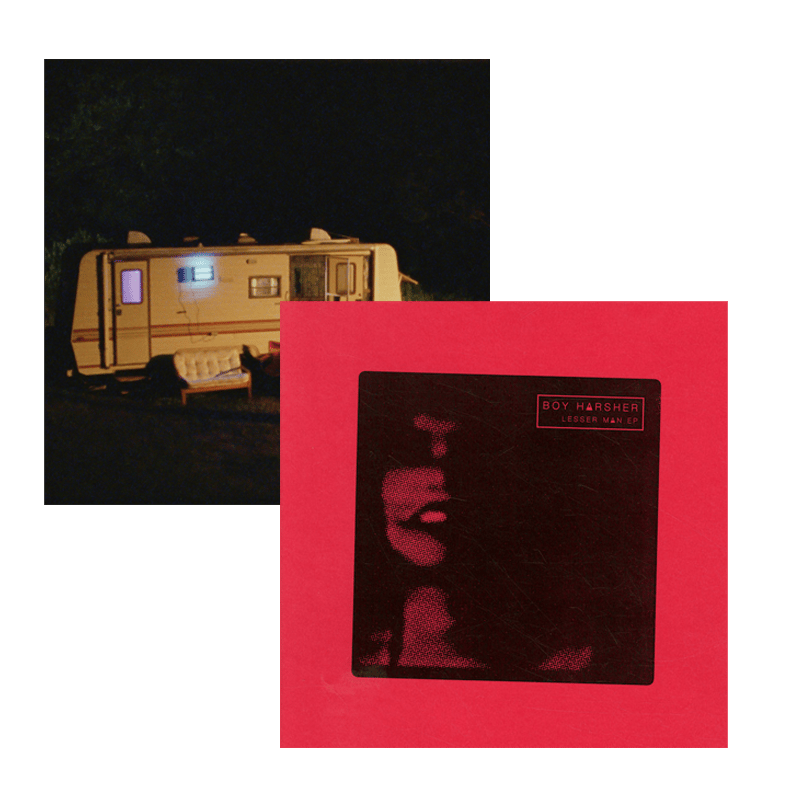
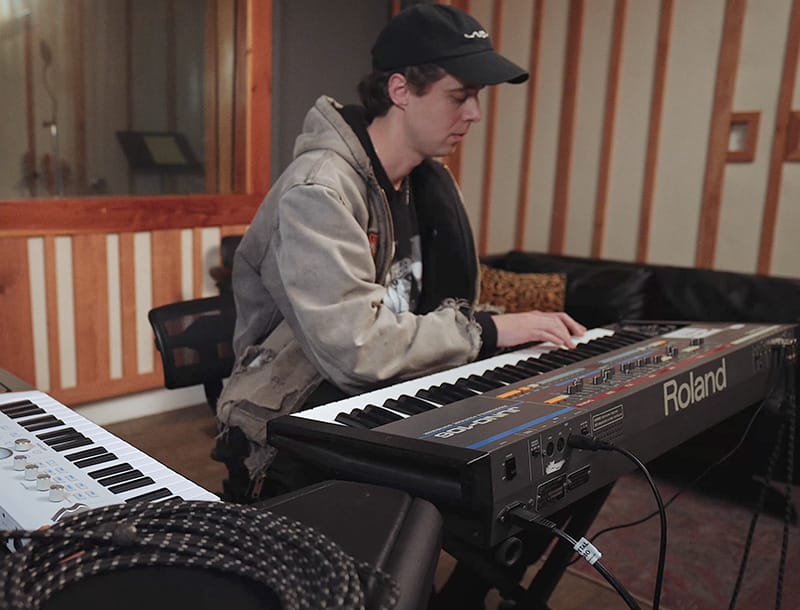
A borrowed Juno-106 later pushed that curiosity further. Despite a missing voice chip and broken keys, its straightforward layout helped him understand signal flow. Alongside the MC-505, it became part of the modest collection of instruments behind Boy Harsher’s debut EP, Lesser Man.
In the demo, he returns to the bassline from “Pain,” listening to the plucked quality of the sound, its slight detuning and the noise of the chorus. He remembers spending hours adjusting it. A part that repeats for seven minutes asks for a particular kind of attention. Over that duration, small changes begin to carry the arrangement.
Repetition still guides his judgment. Much of his music begins with four or eight bars, and a loop that can hold his attention for two hours is a sign that something is worth pursuing. His approach to production is similarly direct. He opens Ableton, starts making something and follows the idea, using the instruments at hand to give shape to whatever he is experiencing that day.
For me, I feel like I’ve been trying to make the same song. I’ve been trying to make the same film for the last twenty years, and I haven’t done that yet, and I’m still completely content trying to do that. So with Boy Harsher, we sit down and we’re trying to make something, and we’re still trying to achieve that same goal.
Finding the voice
Meeting Jae turned Muller’s personal approach into a shared musical practice. Their partnership gives Boy Harsher its particular interaction between voice and electronics, with arrangements developing around her presence and different aspects of his production finding their expression through collaboration.
Cooper B. Handy, who also records as LUCY, brought a different set of instincts. Their work together began with “Autonomy” for The Runner, released in 2022. The session revealed a chemistry they wanted to continue exploring, and they kept making music together over the following years. Safe Mind’s debut album, Cutting the Stone, arrived in July 2025 on Nude Club.
Augustus describes a lighter side to his music that working with Cooper allowed him to explore. As the songs accumulated, the project found its identity in the sounds, themes and instincts they shared.
Boy Harsher and Cooper made ‘Autonomy’ together for The Runner, and I feel like we were scratching the surface of something. There was something really visceral about the emotion we made in that song. So we just kept making music together. And it came very naturally, and I think we both had the same instincts, and we were leaning towards the same sounds and same themes. And it just grew really organically.
V Collection: History within reach
Augustus’s relationship with Arturia began while making Yr Body Is Nothing. As he moved further into Ableton and software instruments, Jup-8 V gave him a new sound to explore. He had never played a hardware Jupiter-8, so his relationship with the plugin developed through its own possibilities. The brooding drone on “Keep Driving” is one of the sounds that came out of that exploration.
That openness sits alongside a lasting interest in older instruments. The MC-505 introduced him to a much wider range of synth sounds, with presets that reflected different instruments and moments in dance music. Exploring them helped him recognize what he liked, and preset browsing remains a substantial part of his studio practice. Some days are spent working through the library of a newly acquired synth, discovering what it is made of.
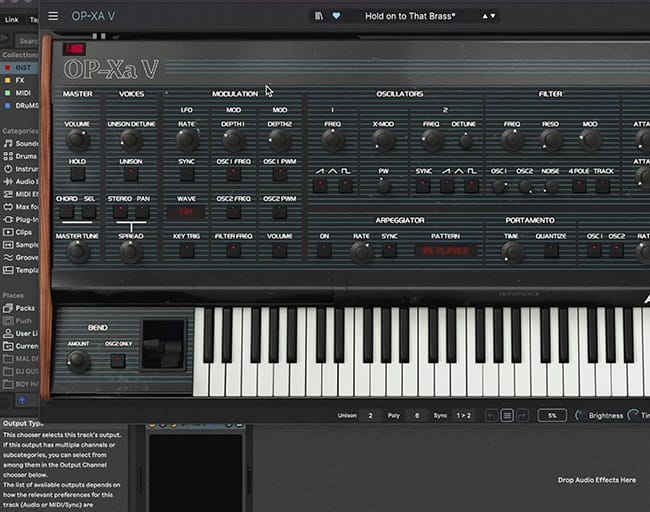
V Collection extends that habit across instruments with very different histories. OP-Xa V sits alongside the Oberheim hardware in his setup, while CMI V gives him access to iconic Fairlight samples: orchestra hits, old percussion and the pan flute he associates with Janet Jackson. These references remain active in his own listening. Augustus and Cooper describe returning repeatedly to Rhythm Nation while traveling between shows, with its production becoming an inspiration for Safe Mind.
For Augustus, discovering and saving sounds becomes a form of collage, drawing on the associations held within a preset while finding a different place for it in his own music.
I don’t really believe in analog warmth. I feel like that’s almost a misnomer. I think you can get great sounds out of both digital and analog. What I like about Arturia products is that they just reference all these amazing synths. I mean, the library is insane. You’ve got Ensoniq products, you’ve got Oberheim stuff, you’ve got all the Roland stuff. And that’s just the world I want to live in.
Writing between places
Having those instruments to hand within a mobile setup has changed when Augustus can write. Before working extensively with V Collection, he rarely sketched music on tour. Now the periods between shows can become part of a song’s development, with the same sounds waiting when he returns to the studio.
One Boy Harsher piece began during trips between New York and Massachusetts. The four-and-a-half-hour Amtrak journey gave him time to watch the landscape pass and work on music. He spent two hours shaping a four-bar phrase in MiniFreak V, and that synth line became the song’s anchor.
The track continued through a studio session in Texas, where analog instruments could be layered with or tested against the software parts, before being finished in Italy. Augustus describes an arrangement containing ten or fifteen instruments, including hardware, plugins and samples. Each stage became a chance to decide which version of a sound belonged in the song. Sometimes replacing a software part with hardware gave him something he wanted; sometimes the plugin was already the better fit.
The plugins are great. I mean, to be able to show up to someone’s apartment and have forty synths with you is pretty clutch.
AstroLab: Bringing the record onstage
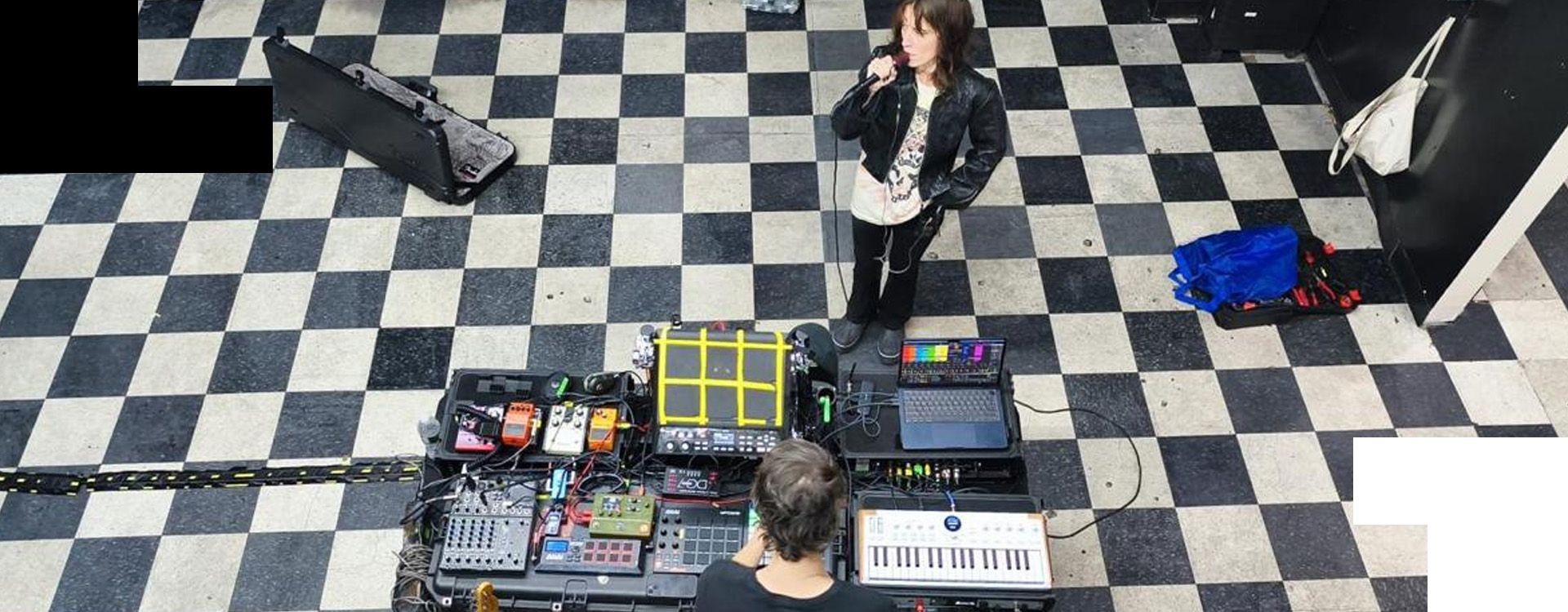
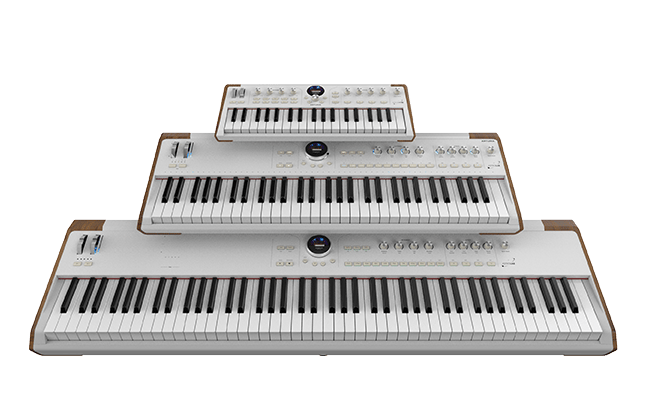
Preparing the Safe Mind live set raised a different set of questions. The record had developed over three or four years, drawing on instruments used in several places. Augustus needed to decide which parts to play and how to gather those sounds within a setup he could take on tour.
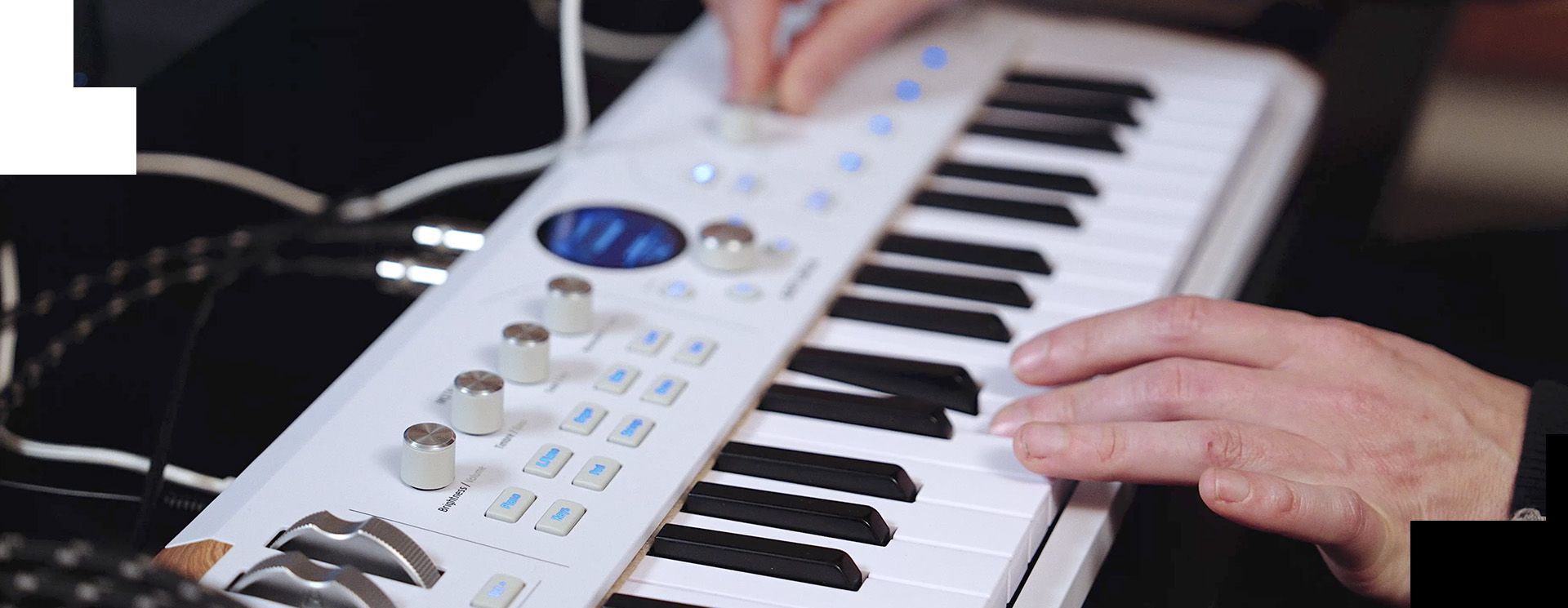
Previously, he sampled his synths note by note, cut up the recordings and arranged them across a sampler keyboard. Each instrument could take two days to prepare, and once the notes were mapped, the sound stayed fixed. AstroLab allows him to perform with compatible Arturia instrument presets while retaining access to synthesis and performance controls. Sounds prepared in software can be transferred and organized through Analog Lab, with their macros and effects available from the keyboard.
He demonstrates the process with the “Pain” bass sound. Moving from the Juno-106 to Jun-6 V, he finds a familiar layout, makes adjustments and saves a preset named “Pain Bass.” He then brings it into AstroLab and adds it to a playlist. The filter cutoff is already mapped to a front-panel control, placing an adjustment he would want to make during a show within immediate reach.
Another example comes from an early Safe Mind beat. Its original synth line was made on an OB-6, but Augustus had lost the patch. Returning to the recorded part, he rebuilds its character with an Oberheim software instrument and prepares a sound he can play through AstroLab. Presets provide a starting point; listening and adjustment bring him closer to the part he remembers.
In both cases, the aim is to carry the identity of a recorded sound into a performance without fixing it in place. The part remains recognizable, but it also becomes playable and open to change.
I used to sample them all, cut them all up into notes and then lay them out on a sampler keyboard. But now you actually have the synthesis. I’m going from show to show, I want to make a tweak on that patch, I can do that. I want to map something out to the knobs, I can do that. So it just feels like a perfect extension from the analog gear, the plugins, and then now you have the live aspect to that.
A sound worth staying with
Augustus still describes himself as someone making music in his house. Records, film scores and live shows have grown from that daily practice, but he continues to begin at close range: one room, one instrument, an idea repeated until its character becomes clear. Four bars may hold his attention for hours; a beat set aside can reveal its direction when another voice enters.
Across Boy Harsher, Safe Mind and his scoring work, this sustained listening is both a method of composition and a way of taking stock. He stays with a sound until it gives form to something he had not yet found the words for.
It’s important for me to make music, and it’s like an exercise. I go in there, and what’s cool about music is it sort of explains what you’re going through. It’s almost like a diary. Whatever I’m going through that day, or there’s something inside me, I get to mess with the gear I have to try to explain that.